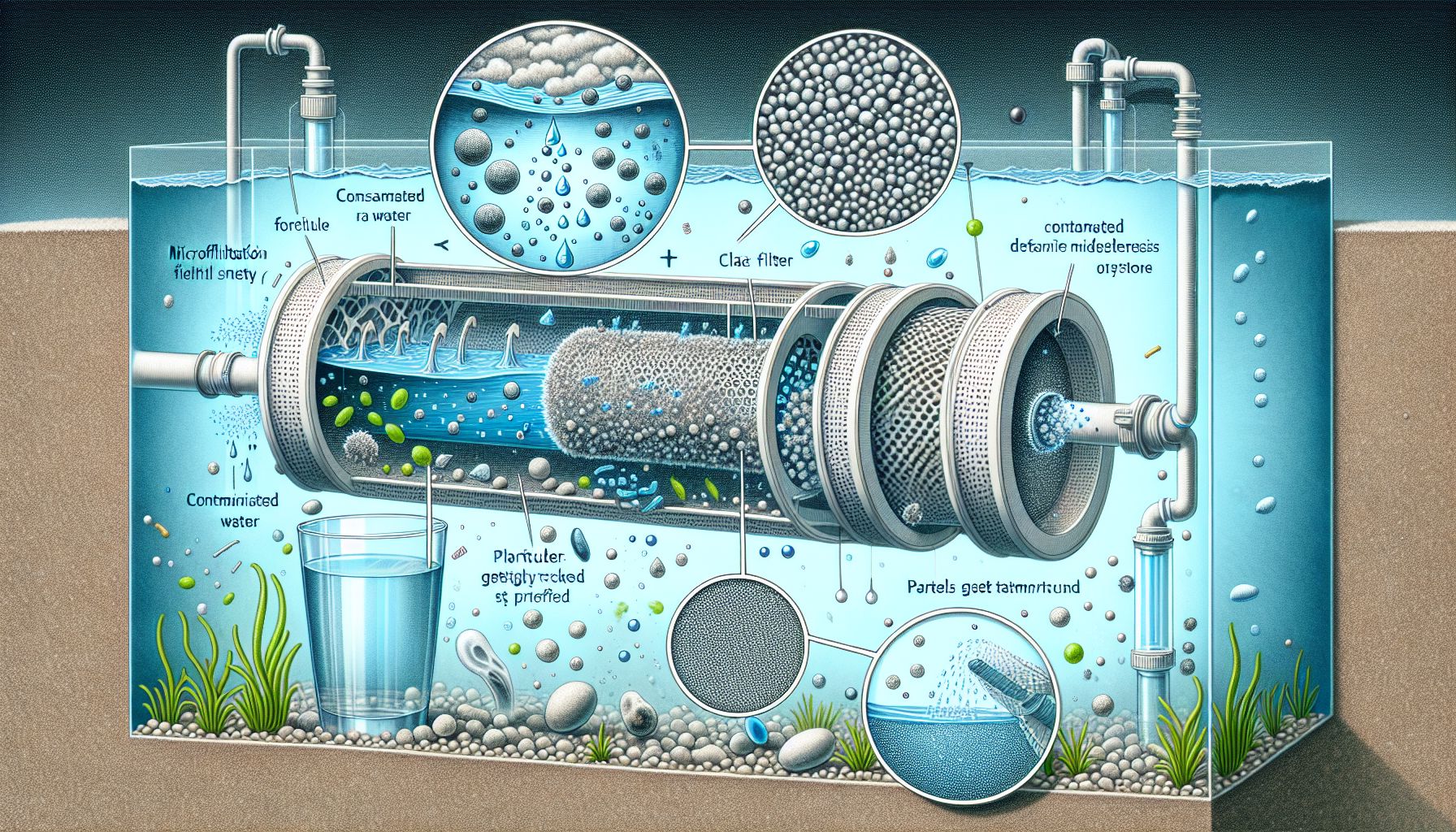
As water scarcity and pollution remain a pressing global concern, ingenious ways of enhancing water quality become of utmost importance, especially those that combine efficiency with environmental sustainability. One such method is microfiltration, a state-of-the-art treatment process that has been making waves in the water industry, and for good reason. Let’s dive into the science behind this technology, its effectiveness in improving water safety, and how it is integrated into broader water treatment strategies.
Understanding Microfiltration
To get the ball rolling, let’s first shed light on what microfiltration actually entails. Simply put, it’s a physical filtration process where water is passed through a semi-permeable membrane with pore sizes typically ranging from 0.1 to 10 micrometers. The idea is straightforward, but its effect is anything but simple. This separation process removes 99 percent of suspended particles and specific organic matter, including pathogens such as bacteria, algae, and some viruses, delivering crystal-clear, safe water.
Comparing microfiltration to conventional water treatment methods can also be insightful. Traditional processes, such as sand filtration, involve little more than the removal of the larger dirt particles. While they have their merits, they usually require chemical supplementation to eliminate the smaller contaminants—prompting potential negative environmental impacts. Can you see the appeal of microfiltration now?
The Direct Impact on Water Purity and Safety
Microfiltration has shown tremendous success in the quest for pure, safe water. In fact, a study completed by the Water Research Foundation in 2015 suggested that membrane filtration, including microfiltration, outperformed conventional methods in reducing turbidity, intact microorganisms, and total organic carbon.
Moreover, microfiltration water treatment significantly enhances the taste, odor and appearance of water, which are crucial variables in consumer perception and consumption trends. When was the last time you happily guzzled down water with a metallic taste or a peculiar smell? Case in point.
Microfiltration isn’t strictly about water safety and aesthetics, though. This pioneering process can also help protect our environment. By sidestepping the use of harmful chemicals, it contributes to more sustainable and environmentally-friendly water treatment practices.
The Role of Microfiltration in Comprehensive Water Treatment
Let’s face it: no single treatment method can completely purify water. Thus, it is common practice to couple microfiltration with other treatment processes in a multi-barrier system to achieve optimal water quality. For instance, combining microfiltration with reverse osmosis or ultraviolet irradiation can help remove contaminants that are beyond the initial process’s scope.
Take seawater desalination, for instance. Here, microfiltration can be employed as a pre-treatment step to remove larger suspended solids and bacteria, reducing the load on subsequent steps like reverse osmosis. This not only ensures high-quality water but efficient use of resources, too.
Overcoming the Challenges in Microfiltration
Whilst microfiltration shows a lot of promise, it’s not without its challenges. The initial set-up cost can often be higher than traditional methods, though this is usually offset over time by lower maintenance costs and reduced use of chemicals.
Additionally, the pore-blocking phenomenon known as fouling can hinder the process’s efficiency. However, with continued research and development, solutions like novel membrane materials and anti-fouling strategies are becoming available.
The Future of Microfiltration
Given the ongoing pressure on global water resources, it stands to reason that the focus on effective and sustainable water treatment technologies, such as microfiltration, will only intensify. With advancements in membrane technology like nanocomposite and biomimetic membranes, who knows how far we can take this innovative filtration process?
As we wrap up, remember, while microfiltration is a powerful tool for enhancing water quality, it achieves its best results when used as a piece in the larger puzzle of comprehensive water treatment strategies. As the world strives for pure, safe, and environmentally friendly water supply, expect to see more of this impressive technology. You might want to brace for the microfiltration wave – it’s definitely here to stay!