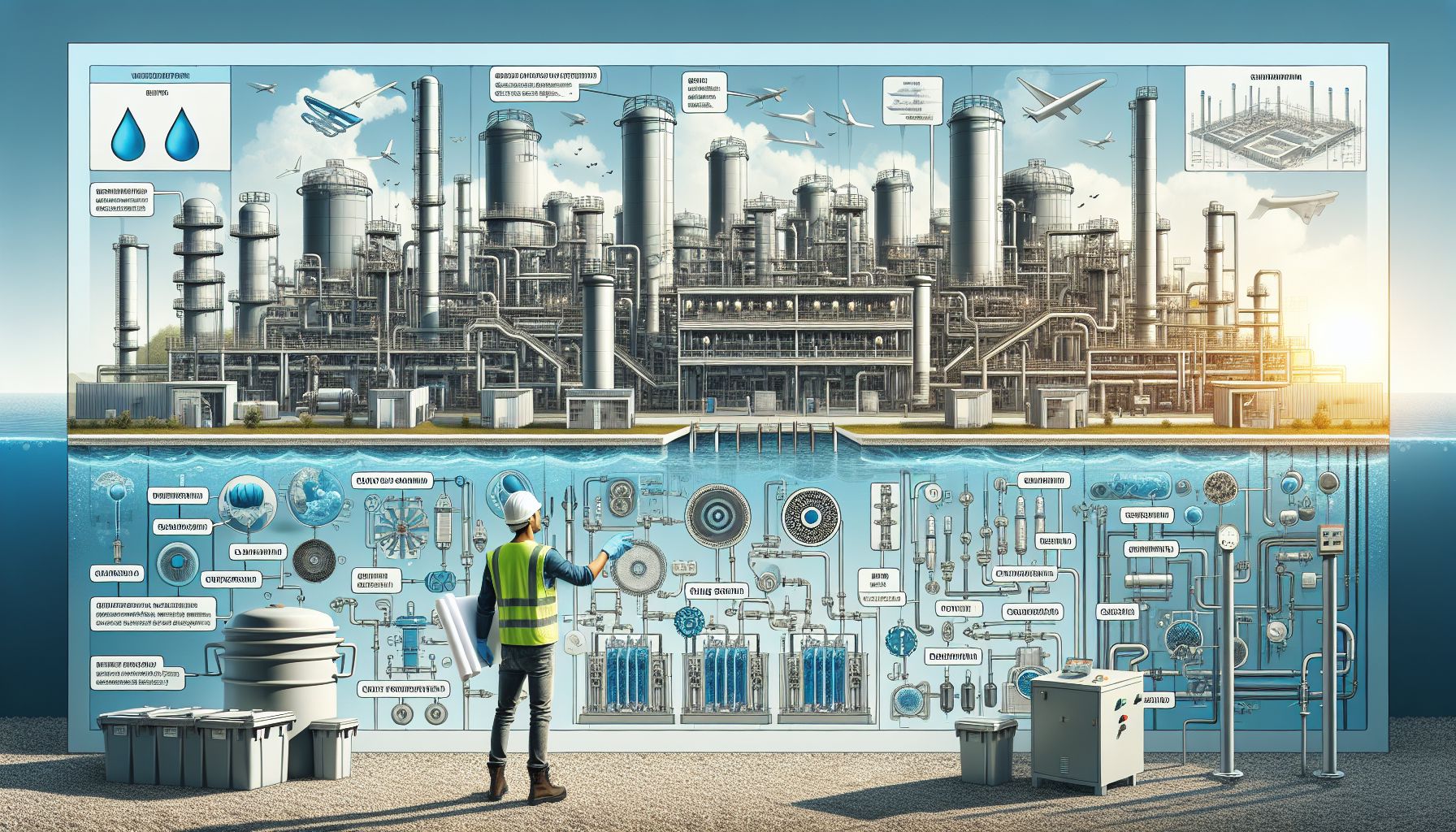
Water is the foundation of life on Earth and arguably our most precious natural resource. However, our water sources can’t supply us with clean, safe water without a purposeful effort to maintain their quality. This is where water and wastewater treatment comes into play. This process, essential for ensuring public health and environmental sustainability, is more complex and fascinating than most of us realize.
Understanding the basics of water treatment.
Water treatment is a multi-step process designed to remove impurities and make water clean and safe enough for specific uses, including drinking, irrigation, and industry uses. Raw water (untreated) contains various contaminants like bacteria, viruses, algae, fungi, minerals, and manmade pollutants. These contaminants can cause serious diseases if ingested; hence it’s crucial to remove them. The water treatment process mainly involves coagulation/flocculation, sedimentation, filtration, and disinfection.
How does this look in real life? Imagine a small town near a river. The river water requires treatment to make it safe for drinking and home use. A local water treatment plant processes the water, removing impurities and harmful pathogens, to ensure residents are consuming safe, clean water. A real-world example of water treatment’s effectiveness.
Another critical aspect is the disinfection process, primarily using chlorine or ultraviolet (UV) radiation. Is chlorine safe, you ask? Yes, when used correctly, chlorine, a potent disinfectant, is safe and helps destroy disease-causing pathogens—something UV radiation also proficiently does.
The importance of wastewater treatment.
Before digging deeper into wastewater treatment, let’s address an interesting question about water scarcity. With approximately 71% of the Earth’s surface covered by water, can there be water scarcity? Yes, indeed. Surprisingly, only a small percentage (about 2.5%) of this water is freshwater, and just 0.3% is readily accessible for human use. Further, inefficient water usage and pollution further decrease the availability of safe, usable water. This makes wastewater treatment incredibly important. It focuses on converting used water from homes, businesses, factories, and runoff into effluent that can be either safely returned to the environment or reused.
From a technical standpoint, wastewater treatment involves several processes to remove physical, chemical, and biological contaminants. It includes preliminary treatment (screening and grit removal), primary treatment (sedimentation), secondary treatment (biological processes to remove organic matter), and tertiary treatment (removal of nutrients).
One doesn’t have to look far for an example of wastewater treatment. Consider a bustling city with a high population. Wastewater from homes, businesses, and industries flows to the wastewater treatment facility. The facility treats the water, ensuring it’s safe to return to the environment, helping to protect the city’s residents and the local ecosystem.
Water treatment resources provide an invaluable source of information and detail guidance about these treatment processes. Engaging with such resources can deepen your knowledge and understanding of how these crucial processes help maintain our water’s safety and sustainability.
Challenges and innovative solutions in the water and wastewater industry.
The water and wastewater industry also grapples with challenges like aging infrastructure, climate change, population growth, and increased industrialization and urbanization. For instance, aging infrastructure usually results in higher water loss due to leaks and demanding, costly repairs.
The good news is there’s no shortage of innovative solutions to tackle these challenges. For example, advancements in technology have paved the way for smart water networks (SWNs) that use digital solutions and data analytics to enhance water and wastewater management. From detecting leaks to reducing energy consumption and predicting maintenance needs, SWNs are playing a key role in addressing several pressing issues.
Is it enough to depend on technology solely? No, of course. Along with technological innovations, policy interventions, public-private partnerships, and community participation are also critical, forming an integrated approach to solve water-related challenges.
Future trends in water and wastewater treatment.
What does the future look like for water and wastewater treatment? The future promises to be a dynamic mix of technology and sustainability focused on ensuring access to safe, clean water for all. We are likely to see growing interest and investment in renewable energy, water reuse schemes, and smart water management.
Moreover, experts predict increased use of technologies such as artificial intelligence (AI), Internet of Things (IoT), blockchain, and cloud computing in managing water resources. As we move towards a more digitized, data-driven world, these technologies will increasingly become an essential part of water and wastewater treatment solutions.
Conclusion
Water and wastewater treatment are not mere mechanical processes. They are essential components of our fight against water scarcity, pollutants, and diseases. With increasing pressures on our water resources due to population growth, industrialization, and climate change, the industry needs to constantly innovate and adopt sustainable practices. Embracing technological advances and prioritizing water management can ensure we safeguard our most valuable resource—water—for future generations.
As lucid the water that runs through our taps may seem, it reflects the arduous yet essential journey of purification it undergoes, demonstrating the significant role water and wastewater treatment play in sustaining life on Earth.